 Daphne Carr's volume on Nine Inch Nails and Hank Shteamer's book on Ween. Numbers 78 and 79 respectively.
Thursday, March 10, 2011
Coming soon to a shelf near you...
Daphne Carr's volume on Nine Inch Nails and Hank Shteamer's book on Ween. Numbers 78 and 79 respectively.


Wednesday, March 09, 2011
Ween alert in Brooklyn!
On Sunday, March 20th, Hank Shteamer will be launching and talking about his 33 1/3 on Ween's Chocolate and Cheese at Word Books in Brooklyn. There will also be a screening of some sort, though I'm not sure at this point what that will involve...
RSVP on the facebook event page here. And click here for more information from the good folks at Word.
If you'd like to read an excerpt we posted on the blog a few weeks ago, click here.
* * * * *
Also, just to give you a little advance notice, Greenlight Bookstore in Fort Greene (my neighborhood bookshop!) will be hosting Hank (Ween) along with Bryan Charles (Pavement-Wowee Zowee), Daphne Carr (Nine Inch Nails-Pretty Hate Machine), and Christopher Weingarten (Public Enemy-Nation of Millions) on April 7th. Mark your calendars.Speaking of Ft. Greene, Happy Biggie Day everybody. Where Brooklyn at?
Friday, March 04, 2011
M. Henry Jones, The Fleshtones, Sweat, and the Wall Street Journal
I meant to put up a post about this yesterday, before the event, but it's still a great read nonetheless.
The Anthology Film Archives aired a comprehensive screening of M. Henry Jones's film work on Thursday night, and the Wall Street Journal did a nice write-up of the show, focusing on his video for "Soul City" by the Fleshtones. Joe Bonomo, author of our definitive biography of the Fleshtones, Sweat, is quoted several times in the piece.
The Anthology Film Archives aired a comprehensive screening of M. Henry Jones's film work on Thursday night, and the Wall Street Journal did a nice write-up of the show, focusing on his video for "Soul City" by the Fleshtones. Joe Bonomo, author of our definitive biography of the Fleshtones, Sweat, is quoted several times in the piece.
Wednesday, March 02, 2011
The 400 Blows
I like to imagine this happening on stage as a drum solo.
via WFMU's Beware of the Blog (it's worth mentioning that their fundraising marathon is going on right now, and we donated some 33 1/3s as premiums!)
via WFMU's Beware of the Blog (it's worth mentioning that their fundraising marathon is going on right now, and we donated some 33 1/3s as premiums!)
Friday, February 25, 2011
Live in London? Like Kraftwerk? Check this out....
The Wire Salon will be hosting an event at Cafe Oto in honor of Sean Albeiz and David Pattie's new Kraftwerk book. Details Below from cafe OTO
For this edition of The Wire Salon, Music Non-Stop's co-editors Sean Albiez and David Pattie will draw together several of the themes introduced in the book, offering a variety of new perspectives on Kraftwerk's unique synthesis of music, technology, visual iconography and performance into a finely honed Gesamtkunstwerk (total artwork).
The two-handed talk/presentation/performance will explore multiple aspects of the Kraftwerk project, from the group's complex relationship with the German national identity to its apparent embrace of a pan-European sensibility, from its liminal status on the cusp of pop/art to its profound and continuing influence on the global electronic music network.
The talk will be illustrated by selected audio and visual clips.
TUESDAY 15th March 2011
Door Times : 8pm
£4 on the door
For this edition of The Wire Salon, Music Non-Stop's co-editors Sean Albiez and David Pattie will draw together several of the themes introduced in the book, offering a variety of new perspectives on Kraftwerk's unique synthesis of music, technology, visual iconography and performance into a finely honed Gesamtkunstwerk (total artwork).
The two-handed talk/presentation/performance will explore multiple aspects of the Kraftwerk project, from the group's complex relationship with the German national identity to its apparent embrace of a pan-European sensibility, from its liminal status on the cusp of pop/art to its profound and continuing influence on the global electronic music network.
The talk will be illustrated by selected audio and visual clips.
Wednesday, February 23, 2011
Thursday, February 17, 2011
Henry Rollins, Punk
S.X. Rosenstock has a good piece on the Huffington Post about Henry Rollins, who turned 50 a few days ago. Here's an extract:
"Henry Rollins stalks the earth. Tibet. Uganda. Mongolia. North Korea. The Costco in Burbank. He pounced onto the stage at LA's Largo to demonstrate relentless curiosity about the world and concern for it as he performed the first in a series of spoken word shows celebrating his fiftieth birthday. Hardcore/punk is a bell he can't unring. It is a mandate impossible to live, and a goad toward constant confrontation he can't ignore. Confrontation has been his lifestyle. At fifty it is his legacy."
But of course the part that really jumped out at me was this one:
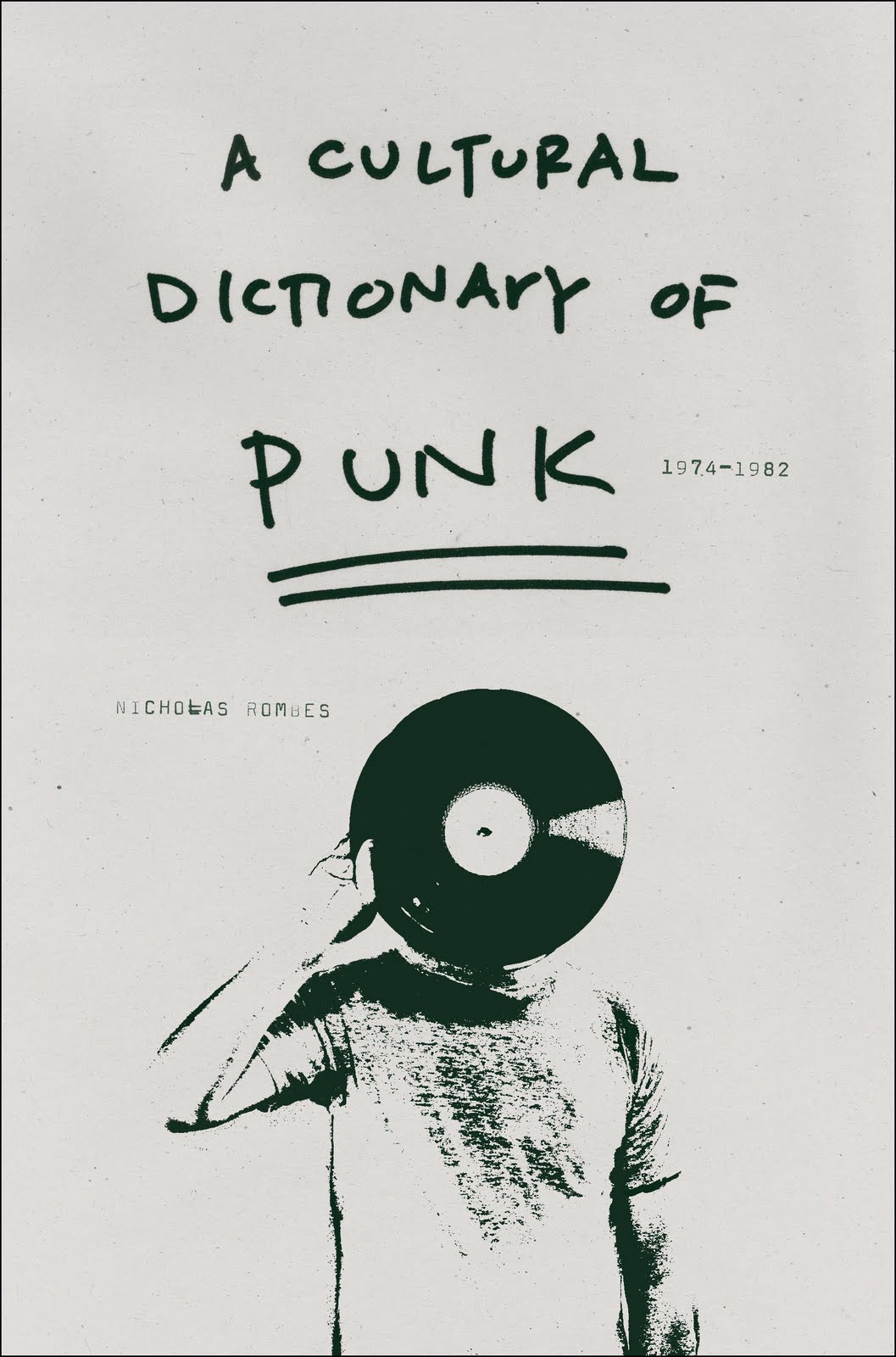
"All over LA and Orange Counties people are stuck in traffic and worried about their immediate and long-term futures. It is funny how listening to the punk music that was born in So Cal helps the helplessness because punk as a movement has been proved to have died almost before it began. (I'm obsessed with Nicholas Rombes' amazing book, A Cultural Dictionary of Punk from Continuum Books, and carry it everywhere.)"
If you haven't dipped your punkie toe into Rombes' book yet, please do so by clicking on the "preview" button on our website here.
Friday, February 11, 2011
Fleetwood Mac's Tusk
We're very pleased to announce that the volume in the series about Tusk is now widely available.
Here's what it says on the back of the book:
After Rumours became the best-selling single album of all-time, Fleetwood Mac asked Warner Brothers Records to buy them a studio (the label refused, costing both Warner Brothers and the band significant cash in the long run) and then handed the reins to their guitarist and resident perfectionist Lindsey Buckingham. “You know,” Buckingham told me, “we had this ridiculous success with Rumours. We were poised to do another album, and I guess because the axiom ‘If it works, run it into the ground’ was prevalent then, we were probably poised to do Rumours II. I don’t know how you do that, but somehow my light bulb that went off was, ‘Let’s just not do that. Let’s very pointedly not do that.’ ”
Here, Rob Trucks talks to Lindsey Buckingham, as well as members of Animal Collective, Camper Van Beethoven, the New Pornographers, Wolf Parade, and the USC Trojan marching band in order to chart both the story and the impact of an album born of personal obsession and a stubborn unwillingness to compromise.
Rob Trucks lives and obsesses in Long Island City, New York.
And here's a taste of what's inside the book:
Perhaps artists were merely gearing up for the Reagan years, but something about the late ’70s made successful creative-types spring headlong from triumph into the pool of excess.
Following the critical and commercial achievement of The Godfather: Part II, Francis Ford Coppola overextended cast, crew, and budget in the jungles of the Philippines to make Apocalypse Now. The cost of production, including a not insubstantial infusion from Coppola himself, ran to nearly $40 million, the most expensive movie ever made (at the time).
After Rumours becomes a generational touchstone, Fleetwood Mac custom-built a studio and handed the reins to Lindsey Buckingham, a fusion of factors that led Tusk to become the first record in history to cross the million-dollar threshold in production costs.
When I take a song into Fleetwood Mac . . . I mean, it certainly wasn’t like that on Tusk, but most of the time it was a fairly conventional thing. You’d have to pretty much have it worked out for the group to respond to. The changes that get made and the way band involves themselves in it are all fairly conscious. It’s like Point A to Point B. It’s like making a movie probably. You talk about it. No, let’s shoot it this way and then you shoot it and you run the tape and you play.
—Lindsey Buckingham, October 11, 2006
Like Godfather II, Michael Cimino’s Deer Hunter succeeds by all measures. Both films finish among the top ten in gross for their respective years. Both win the Academy Award for Best Picture. Cimino moves on to Heaven’s Gate, which eclipses Apocalypse Now as the most expensive film ever produced, and single- handedly bankrupts the United Artists studio.
You could do a similar comparison/contrast with Tusk and Heaven’s Gate, with Buckingham and Cimino, but Tusk, though expensive, didn’t bankrupt Warner Brothers.
In fact, Tusk, a now legendary commercial failure, made money...
...Actually, Tusk lies somewhere in between.
Apocalypse Now, while branded for ever and all time as egoistically excessive, is, nevertheless, a success. Both commercially and critically, against any and all measures save for outsized expectations and comparisons with Coppola’s previous work.
Heaven’s Gate is a disappointment by almost every yardstick and stands today as an example of how not to make a movie.
And though Tusk is ultimately profitable, no album in music history falls so precipitously from commercial grace.
Consensus sales figures total 4 million for Tusk (it most recently certified as double platinum all the way back in 1984). Consensus sales figures cluster at 23 million for Rumours (it had sold 12 million copies by 1984 and picks up another million in sales every three to five years).
Regardless of the set of numbers used, Rumours to Tusk represents the largest drop from one album to the next. Ever.
Even Hootie and the Blowfish sold 3 million copies of their sequel to Cracked Rear View (#16 all time). So did Alanis Morrissette’s follow-up to Jagged Little Pill (#20 all time).
And neither Cracked nor Jagged came close to the sales of Rumours.
The music business has changed. No record in the future, at least in any currently known format, will ever sell 20 million copies, which makes a competing collapse impossible.
The Rumours to Tusk nosedive is a fall that will stand forever.
The music business has changed. The 4 million copies of Tusk which represent the groundside of the drop from dizzying heights would now qualify as the best-selling album of the year.
You make a decision to work outside. Here’s where everyone else is and you want to be over here. That’s your decision. If you see it and you feel it and it’s a vision you have, you have the choice to move towards it or not, and at that point it’s not really so much about everybody else, only in the sense that you don’t have a support system. You have to be your own support system. You have to keep patting yourself on the back and having the balls to keep, you know, sort of believing.
—Lindsey Buckingham, October 11, 2006
Wednesday, February 09, 2011
Jesse Eisenberg likes Ween...and somehow the world is shocked by this?


Hot dork extraordinaire, Jesse Eisenberg, has claimed his affection for Ween and our very own 33 1/3 author, Hank Shteamer was there to report it! The whole interview, featured in Spin, can be found here. Eisenberg first heard Chocolate and Cheese when a friend offered the song "Spinal Meningitis" as preparation/comic relief for a role. That was just the beginning of his affection for the iconic album with the boundary-pushing cover. This news is so huge that New York Magazine picked up the story too.
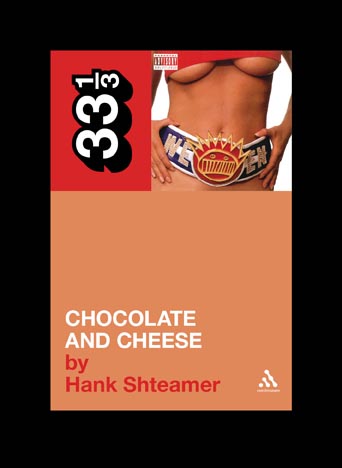
Hank Shteamer’s 33 1/3 on Chocolate and Cheese will be available March 17, check it out on Continuum's site or pre-order from Amazon.
Friday, February 04, 2011
Cleaning out the bookmarks menu...
Pitchfork's Poptimist column recently had some very nice things to say about Geeta Dayal's 33 1/3 on Brian Eno's Another Green World:
* * * * * * * * * *
I've been slowly working my way through this year-by-year essay series on the 90's alternative music from The Onion's AV Club.
If you like infographics, A Very Small Array continues to work through the Billboard/Pitchfork top 100s of 2010. Pie graphs, bar charts, scatter plots...there's something for everyone here.
* * * * * * * * * *
Hua Hsu has a pretty cool consideration of the cassette tape as a format/medium/aesthetic in the latest issue of Artforum. (A tip of the cap to Ed Park for the link.)
* * * * * * * * * *
Next week I'll be at the College Arts Association (CAA) meeting in New York, hanging out in the exhibit hall Thursday-Saturday. Stop by booth #714 and say hello.
Released as part of Continuum Books' 33 1/3 series on classic albums, the book mostly sidesteps the finished LP to make the process the hero. Eno's use of collaboration, chance, and cybernetics to force creativity makes for a fascinating story, enlivened by the sometimes bemused but always fond recollections of participants from the 70s and after. He swings microphones from the ceiling, he scraps whole days' work on the turn of a card, and in the book's most delicious story, he makes David Bowie's sessionmen take part in a musical role-playing session, handing out character cards. "You are the morale booster of a small rag-tag terrorist operation. You must keep spirits up at all costs."
* * * * * * * * * *
* * * * * * * * * *
I've been addicted to these Marc Maron podcasts since my flight back from the Christmas break turned into a rather fun 20 hour road trip. This one with Henry Rollins is pretty great. If you're a fan, this one with Ira Glass is not to be missed. The conversation with Gallagher was kind of depressing, though.The KEXP blog interviews Scott Tennent about his 33 1/3 on Slint's Spiderland. I had forgotten that this was the 75th in the series... A nice round number and a damn fine book!
* * * * * * * * * *
* * * * * * * * * *
I've been slowly working my way through this year-by-year essay series on the 90's alternative music from The Onion's AV Club.
* * * * * * * * * *
If you like infographics, A Very Small Array continues to work through the Billboard/Pitchfork top 100s of 2010. Pie graphs, bar charts, scatter plots...there's something for everyone here.
* * * * * * * * * *
Hua Hsu has a pretty cool consideration of the cassette tape as a format/medium/aesthetic in the latest issue of Artforum. (A tip of the cap to Ed Park for the link.)
* * * * * * * * * *
And one more defaced album covers link to add to the two I posted here a few weeks ago. This never seems to get old, does it?
* * * * * * * * * *
Next week I'll be at the College Arts Association (CAA) meeting in New York, hanging out in the exhibit hall Thursday-Saturday. Stop by booth #714 and say hello.
Tuesday, February 01, 2011
Tuesday, January 25, 2011
Forthcoming: Ween, Chocolate and Cheese
Due out in the second half of March is Hank Shteamer's excellent study of Ween, and particularly of their Chocolate and Cheese album from 1994. Here's an extract from the book:
***
At the complete opposite end of the emotional spectrum from “Deaner” is the notorious “HIV Song.” Despite its extreme simplicity and brief length, it’s nevertheless one of Ween’s most memorable compositions—as well a staple of the band’s live shows to this day—due to its maniacal central conceit: the juxtaposition of the words “AIDS” and “HIV” with whimsical carnival music. Realized, like “Baby Bitch,” at Graphic Sound with Greg Frey, the track features an exhaustively repetitive arrangement, marked by a chugging drum-machine groove and festive organ. A calliope-esque theme plays for seven bars, then drops out for a queasy-sounding vocal interjection. The song doesn’t stray too far from Pure Guava territory, but it’s more nuanced than it initially sounds. For example, electronic textures swirl around the song’s bluesy midsection, lending the track an otherworldly trippiness. In the end, thought, it’s obviously the lyrics—all two of them—that make “The HIV Song” stand out.
As one might imagine, responses to this tune have varied wildly. “I’m pretty sure this song just came about by Gene and Deaner sitting in the studio thinking to themselves, What’s the most offensive song we can possibly make? They sure pulled it off!,” observes one message-board commenter. Another takes the opposite view: “I don’t see why people consider this offensive at all. It’s not like they’re saying ‘AIDS is Great! HIV Rules!’ They’re just using two words.” Melchiondo claims that he has received mainly positive feedback regarding the track, even from those affected by the disease. “I’ve never had any controversy about it,” he claims. “And actually there was this woman around [New Hope]. She was an AIDS victim and she was a public speaker; she went and spoke at high schools about safe sex and HIV and [’The HIV Song’] was her theme song! I met her and the first thing she said was, ‘I love that song.’ She’s like, ‘I start all my lectures with it.’ ”
The New Hope public speaker Melchiondo cites is author and humorist River Huston, who used “The HIV Song” as theme music for her one-woman show How HIV Made Me a Pain in the Ass. To her, the song offers a kind of comedic therapy.
"I’m HIV positive and I do a lot of comedy, which most people don’t get. And I love when people make fun of AIDS. And it’s not that he’s making fun of it, but the circus sounds—the dichotomy between the seriousness of the subject and the fun melody—it’s circus-y to me or ice-cream-truck-like, and I just loved it! It made me laugh. AIDS is horrible, and I write all kinds of books and things on treatments, and I present things about how horrible it is, but I also need to find a way to laugh and to deal with, and [“The HIV Song”] always made me smile."
Huston’s reaction proves that “The HIV Song” is more of a litmus test than a statement. “[The song] doesn’t say anything,” Melchiondo contends. “All it says is ‘AIDS’ and ‘HIV.’ People can make of it what they want. But by bringing it up to us, that makes them guilty of interpreting it the wrong way. It doesn’t say anything; it’s not like making fun of anybody or doing anything.”
In a 12 Golden Country Greats–era interview, Melchiondo elaborated:
"It’s probably the best song about AIDS that’s ever been done. I used to have to answer this question like every single interview. AIDS is sort of like a circus and I think you have to demystify it. I grew up here in New Hope which is probably the largest gay community in the Northeast and I have friends who have AIDS and I know people well who have died of it. I think if you take something like AIDS and put it in the context of music like that you get the most… I don’t know. You could never hear a song like that and forget it. By saying nothing, we’ve said more."
Dave Ayers, Ween’s manager at the time of Chocolate and Cheese, can attest to the song’s unlikely resonance. “They had a remarkable ability to get away with things,” he marvels. “People appreciated the joke. I remember being in San Francisco, and I think it was probably the first time I ever heard ‘The HIV Song.’ So they decided to whip that out to open their set in San Francisco, and I just thought this was the boldest fucking thing you could possibly do—I was again concerned that people were gonna flip out. But the whole room, including gay couples, was laughing hysterically.”
Perhaps audiences were so forgiving because they sensed that any inherent antagonism present in “The HIV Song” wasn’t directed at them. As Melchiondo reveals, the song actually expresses a very local kind of rage:
"New Hope is on the Delaware River, and it’s basically a river town; that’s its No. 1 identity, and there’s a bridge that crosses from New Jersey into New Hope and on the weekends, New Hope is a big tourist town, and there’s all these rides. There’s like horse rides and carriage rides in the street; there’s train rides; there’s a mule barge that takes tourists on mule-barge rides on the canal; there’s ferry boat rides on the river, bicycle rides. And the town gets packed like you’re on the boardwalk at the Jersey Shore on the weekend.
But when you grow up in a town like that, you become fucking bitter. It’s like people who live at the beach year-round, and all the summer tourists come in. That’s what it’s like living in New Hope. So I was with Guy [Heller, a member of Melchiondo’s side project the Moistboyz] one day and we’re walking across the bridge and we’re seeing all this shit: people eating ice cream and it’s so ugly. Guy’s like, 'Man, I just wish I had a fuckin’ megaphone. I’d just like to fuckin’ make an announcement and say, "AIDS! HIV! Cancer!"' And I thought that was hilarious, so I turned it into a song. I did an instrumental where it’s like this happy melody and it’s like, 'AIDS! HIV!'"
Freeman describes Heller’s vision further: “It would be all of the ugly Americans eating ice cream and shopping for garbage in the quaint shops of the area. Guy would be standing, shirtless, with a megaphone, yelling ‘AIDS, HIV!’’ repeatedly. I thought that was a perfect image and that’s how the song was born. I still see Guy and a megaphone when we perform the song live.”
Andrew Weiss takes a more serious view of the tune:
"That song’s an amazing work of art. That stands up there with one of their best, I think. That’s a brilliant, brilliant song, and it’s up there with 'Keep on Rockin’ in the Free World' in terms of deft social commentary in my opinion. There’s not a lot of words to [’The HIV Song’], you know? But it’s not just shock value. It’s not just, 'Oh, here’s a fuckin’ clown cartoon calliope jam, throwing in the word "AIDS." ' It’s deep. But it shocks at the same time too. It’s much heavier than just saying 'fuck' or 'nigger.'"
Another online commenter seems to agree that there’s a serious message embedded within the song: “I think this song is a slap in the face to people who dont take AIDS seriously. The music they play is like carnival cheesy music, kind of like a joke. And that’s how a lot of people take AIDS. They don’t think they will get it and don’t take it seriously.”
Dave Ayers sees the song as stemming from a very sincere paranoia. “AIDS was everywhere,” he says. “You couldn’t escape reading about it, and for them to be making fun of it was so outlandish that people couldn’t really understand where they were coming from. Somebody in an interview asked them, ‘What’s your position on AIDS?’ As though somebody would have a position. And they kind of looked at each other and there was a long pause and one of them said, [In quiet, serious voice] ‘Scared.’ I mean, it’s like the only answer. It was fuckin’ scary, and that song is just whistlin’ in the graveyard.”
Josh Homme also praises the song’s subversive humor. “I just love the avant-garde nature of ‘The HIV Song,’ ” he explains. “Because my favorite movie is Blazing Saddles, and it says ‘nigger’ and ‘Jew’ thousands of times, but it’s written by Mel Brooks and Richard Pryor. The movie’s about how dumb white people are, and using these tools that you have against you. And something like ‘The HIV Song’—[Freeman and Melchiondo] have so many gay friends, and they’re actually really sensitive, cool dudes, but also, when they’re gonna use sarcasm, you better put your armor on, ’cause it’s gonna be sharp and it’s gonna be right in the gut.”
An illustration of Homme’s point is Ween’s never-realized music video for the song. “We would have a video concept for almost every song, and the one for ‘The HIV Song’ was brilliant,” recalls Weiss. “It was Mickey’s concept, basically. It was a single-camera, point-of-view shot from a person in a hospital bed, like drab, off-green walls, you know. And you see these feet coming out, and the door. And the song starts and the door flies open and in comes, like, the fucking carnival: clowns and people fuckin’ spitting fire and all that shit and it just turns into this big swirling mass around the room over the course of the song. And then at the end of the song, he flatlines. Pretty evil shit.”
While many are either amused or offended by the edgy humor of “The HIV Song,” bewilderment might be the most common reaction, as evidenced by Steve Ralbovsky’s perspective:
"I support the entirety of [Ween], and I defend the entirety of it, but ['The HIV Song'] was always a bit of a head-shake move for me. What was the point of it? Was it just shock value for shock value’s sake? However many years later, I’m still not sure what the ultimate value derived from it was. It was so minimal that maybe it was, in some way, just calling [HIV/AIDS] out there, so that if those guys could comment on it in that way, it would somehow make it an issue that people would have to deal with differently in the Ween world. But it had this kind of carnival music or circus-music thing about it that made it hard for you to think that they were making some poignant comment. The long-winded answer is: I still don’t know."
Despite his ambivalence, it’s to Ralbovsky’s credit that, much as he embraced Ween’s lo-fi methods wholeheartedly, he left the final judgment of where to draw the line of taste entirely up to the band.
"I don’t think it would’ve made a bit of difference if I had cautioned them that 'The HIV Song' might put them in bad light with people or make them seem insensitive,” he asserts. “You can’t sign something that was so self-determined and so unique and then try to say, ‘Well, maybe you should think about this or maybe you should think about that.’ It was take it all as it came in, for good or bad. They were determined to do what they wanted to do and it was unthinkable to guide them in any particular direction. All you could do was maybe express preferences: ‘I love that song’ or ‘That’s one of my favorite songs.’ You weren’t fiddling with them or advising them to leave songs off of records because of their potential misunderstanding or shock value.
"I could always kind of compartmentalize. There might have been some private cringe moments around a few colleagues from time to time when you’d be listening to something in a group. But there was no boundary line for me in terms of good or bad taste, with them. It was just what they did, and shock value was part of it."
With Chocolate and Cheese, it became obvious that what Ween did was changing. These 16 songs laid out the blueprint for a new Ween: The lovable underdogs of The Jane Pratt Show were giving way to real musicians, artists who swam parallel to the rock mainstream even if they never wholeheartedly entered it and whose records rivaled canonical classics for hi-fi inventiveness. It was clear that Ween had a future after all.
***

***
At the complete opposite end of the emotional spectrum from “Deaner” is the notorious “HIV Song.” Despite its extreme simplicity and brief length, it’s nevertheless one of Ween’s most memorable compositions—as well a staple of the band’s live shows to this day—due to its maniacal central conceit: the juxtaposition of the words “AIDS” and “HIV” with whimsical carnival music. Realized, like “Baby Bitch,” at Graphic Sound with Greg Frey, the track features an exhaustively repetitive arrangement, marked by a chugging drum-machine groove and festive organ. A calliope-esque theme plays for seven bars, then drops out for a queasy-sounding vocal interjection. The song doesn’t stray too far from Pure Guava territory, but it’s more nuanced than it initially sounds. For example, electronic textures swirl around the song’s bluesy midsection, lending the track an otherworldly trippiness. In the end, thought, it’s obviously the lyrics—all two of them—that make “The HIV Song” stand out.
As one might imagine, responses to this tune have varied wildly. “I’m pretty sure this song just came about by Gene and Deaner sitting in the studio thinking to themselves, What’s the most offensive song we can possibly make? They sure pulled it off!,” observes one message-board commenter. Another takes the opposite view: “I don’t see why people consider this offensive at all. It’s not like they’re saying ‘AIDS is Great! HIV Rules!’ They’re just using two words.” Melchiondo claims that he has received mainly positive feedback regarding the track, even from those affected by the disease. “I’ve never had any controversy about it,” he claims. “And actually there was this woman around [New Hope]. She was an AIDS victim and she was a public speaker; she went and spoke at high schools about safe sex and HIV and [’The HIV Song’] was her theme song! I met her and the first thing she said was, ‘I love that song.’ She’s like, ‘I start all my lectures with it.’ ”
The New Hope public speaker Melchiondo cites is author and humorist River Huston, who used “The HIV Song” as theme music for her one-woman show How HIV Made Me a Pain in the Ass. To her, the song offers a kind of comedic therapy.
"I’m HIV positive and I do a lot of comedy, which most people don’t get. And I love when people make fun of AIDS. And it’s not that he’s making fun of it, but the circus sounds—the dichotomy between the seriousness of the subject and the fun melody—it’s circus-y to me or ice-cream-truck-like, and I just loved it! It made me laugh. AIDS is horrible, and I write all kinds of books and things on treatments, and I present things about how horrible it is, but I also need to find a way to laugh and to deal with, and [“The HIV Song”] always made me smile."
Huston’s reaction proves that “The HIV Song” is more of a litmus test than a statement. “[The song] doesn’t say anything,” Melchiondo contends. “All it says is ‘AIDS’ and ‘HIV.’ People can make of it what they want. But by bringing it up to us, that makes them guilty of interpreting it the wrong way. It doesn’t say anything; it’s not like making fun of anybody or doing anything.”
In a 12 Golden Country Greats–era interview, Melchiondo elaborated:
"It’s probably the best song about AIDS that’s ever been done. I used to have to answer this question like every single interview. AIDS is sort of like a circus and I think you have to demystify it. I grew up here in New Hope which is probably the largest gay community in the Northeast and I have friends who have AIDS and I know people well who have died of it. I think if you take something like AIDS and put it in the context of music like that you get the most… I don’t know. You could never hear a song like that and forget it. By saying nothing, we’ve said more."
Dave Ayers, Ween’s manager at the time of Chocolate and Cheese, can attest to the song’s unlikely resonance. “They had a remarkable ability to get away with things,” he marvels. “People appreciated the joke. I remember being in San Francisco, and I think it was probably the first time I ever heard ‘The HIV Song.’ So they decided to whip that out to open their set in San Francisco, and I just thought this was the boldest fucking thing you could possibly do—I was again concerned that people were gonna flip out. But the whole room, including gay couples, was laughing hysterically.”
Perhaps audiences were so forgiving because they sensed that any inherent antagonism present in “The HIV Song” wasn’t directed at them. As Melchiondo reveals, the song actually expresses a very local kind of rage:
"New Hope is on the Delaware River, and it’s basically a river town; that’s its No. 1 identity, and there’s a bridge that crosses from New Jersey into New Hope and on the weekends, New Hope is a big tourist town, and there’s all these rides. There’s like horse rides and carriage rides in the street; there’s train rides; there’s a mule barge that takes tourists on mule-barge rides on the canal; there’s ferry boat rides on the river, bicycle rides. And the town gets packed like you’re on the boardwalk at the Jersey Shore on the weekend.
But when you grow up in a town like that, you become fucking bitter. It’s like people who live at the beach year-round, and all the summer tourists come in. That’s what it’s like living in New Hope. So I was with Guy [Heller, a member of Melchiondo’s side project the Moistboyz] one day and we’re walking across the bridge and we’re seeing all this shit: people eating ice cream and it’s so ugly. Guy’s like, 'Man, I just wish I had a fuckin’ megaphone. I’d just like to fuckin’ make an announcement and say, "AIDS! HIV! Cancer!"' And I thought that was hilarious, so I turned it into a song. I did an instrumental where it’s like this happy melody and it’s like, 'AIDS! HIV!'"
Freeman describes Heller’s vision further: “It would be all of the ugly Americans eating ice cream and shopping for garbage in the quaint shops of the area. Guy would be standing, shirtless, with a megaphone, yelling ‘AIDS, HIV!’’ repeatedly. I thought that was a perfect image and that’s how the song was born. I still see Guy and a megaphone when we perform the song live.”
Andrew Weiss takes a more serious view of the tune:
"That song’s an amazing work of art. That stands up there with one of their best, I think. That’s a brilliant, brilliant song, and it’s up there with 'Keep on Rockin’ in the Free World' in terms of deft social commentary in my opinion. There’s not a lot of words to [’The HIV Song’], you know? But it’s not just shock value. It’s not just, 'Oh, here’s a fuckin’ clown cartoon calliope jam, throwing in the word "AIDS." ' It’s deep. But it shocks at the same time too. It’s much heavier than just saying 'fuck' or 'nigger.'"
Another online commenter seems to agree that there’s a serious message embedded within the song: “I think this song is a slap in the face to people who dont take AIDS seriously. The music they play is like carnival cheesy music, kind of like a joke. And that’s how a lot of people take AIDS. They don’t think they will get it and don’t take it seriously.”
Dave Ayers sees the song as stemming from a very sincere paranoia. “AIDS was everywhere,” he says. “You couldn’t escape reading about it, and for them to be making fun of it was so outlandish that people couldn’t really understand where they were coming from. Somebody in an interview asked them, ‘What’s your position on AIDS?’ As though somebody would have a position. And they kind of looked at each other and there was a long pause and one of them said, [In quiet, serious voice] ‘Scared.’ I mean, it’s like the only answer. It was fuckin’ scary, and that song is just whistlin’ in the graveyard.”
Josh Homme also praises the song’s subversive humor. “I just love the avant-garde nature of ‘The HIV Song,’ ” he explains. “Because my favorite movie is Blazing Saddles, and it says ‘nigger’ and ‘Jew’ thousands of times, but it’s written by Mel Brooks and Richard Pryor. The movie’s about how dumb white people are, and using these tools that you have against you. And something like ‘The HIV Song’—[Freeman and Melchiondo] have so many gay friends, and they’re actually really sensitive, cool dudes, but also, when they’re gonna use sarcasm, you better put your armor on, ’cause it’s gonna be sharp and it’s gonna be right in the gut.”
An illustration of Homme’s point is Ween’s never-realized music video for the song. “We would have a video concept for almost every song, and the one for ‘The HIV Song’ was brilliant,” recalls Weiss. “It was Mickey’s concept, basically. It was a single-camera, point-of-view shot from a person in a hospital bed, like drab, off-green walls, you know. And you see these feet coming out, and the door. And the song starts and the door flies open and in comes, like, the fucking carnival: clowns and people fuckin’ spitting fire and all that shit and it just turns into this big swirling mass around the room over the course of the song. And then at the end of the song, he flatlines. Pretty evil shit.”
While many are either amused or offended by the edgy humor of “The HIV Song,” bewilderment might be the most common reaction, as evidenced by Steve Ralbovsky’s perspective:
"I support the entirety of [Ween], and I defend the entirety of it, but ['The HIV Song'] was always a bit of a head-shake move for me. What was the point of it? Was it just shock value for shock value’s sake? However many years later, I’m still not sure what the ultimate value derived from it was. It was so minimal that maybe it was, in some way, just calling [HIV/AIDS] out there, so that if those guys could comment on it in that way, it would somehow make it an issue that people would have to deal with differently in the Ween world. But it had this kind of carnival music or circus-music thing about it that made it hard for you to think that they were making some poignant comment. The long-winded answer is: I still don’t know."
Despite his ambivalence, it’s to Ralbovsky’s credit that, much as he embraced Ween’s lo-fi methods wholeheartedly, he left the final judgment of where to draw the line of taste entirely up to the band.
"I don’t think it would’ve made a bit of difference if I had cautioned them that 'The HIV Song' might put them in bad light with people or make them seem insensitive,” he asserts. “You can’t sign something that was so self-determined and so unique and then try to say, ‘Well, maybe you should think about this or maybe you should think about that.’ It was take it all as it came in, for good or bad. They were determined to do what they wanted to do and it was unthinkable to guide them in any particular direction. All you could do was maybe express preferences: ‘I love that song’ or ‘That’s one of my favorite songs.’ You weren’t fiddling with them or advising them to leave songs off of records because of their potential misunderstanding or shock value.
"I could always kind of compartmentalize. There might have been some private cringe moments around a few colleagues from time to time when you’d be listening to something in a group. But there was no boundary line for me in terms of good or bad taste, with them. It was just what they did, and shock value was part of it."
With Chocolate and Cheese, it became obvious that what Ween did was changing. These 16 songs laid out the blueprint for a new Ween: The lovable underdogs of The Jane Pratt Show were giving way to real musicians, artists who swam parallel to the rock mainstream even if they never wholeheartedly entered it and whose records rivaled canonical classics for hi-fi inventiveness. It was clear that Ween had a future after all.
***

Thursday, January 20, 2011
Recent odds and ends...
- A nice review of Marvin Lin's 33 1/3 on Radiohead's Kid A in the Seattle Post-Intelligencer:
"Marvin Lin's Kid A works well as a wide-ranging look at music, art, and life as seen through Radiohead's album for those who understand music can be more than just music."
- The new music blog Synconation covers the Kid A and Kate Schatz's 33 1/3 on P.J. Harvey's Rid of Me in what we hope will be an ongoing feature.
- Joe Bonomo's 33 1/3 on AC/DC's Highway to Hell was Outsideleft's pick for music book of the year.
- Watch this space for an excerpt from Rob Trucks' recently published volume on Fleetwood Mac's Tusk. In the meantime, you can check out the electronic preview on this page.
- Here's a nice long interview with Bryan Charles about his new novel. Incidentally, he also wrote the book about Pavement's Wowee Zowee.
- Which leads me to post a picture of this fantastic Pavement cake, shaped like a horse. This episode of Ace of Cakes airs tonight apparently.

My goodness, that looks like good fun.
Wednesday, January 12, 2011
Moody and Lehman discuss Bob Dylan and The Band

Next Wednesday, an exciting event is happening in the East Village.
From 14th Street Y's website:
After a weekend of successful events last month, the 14th Street Y will continue its celebration of Bob Dylan and the Band with an exciting event, in partnership with improv-writing website QuickMuse and JBooks.com. The evening will feature an interactive discussion with novelist Rick Moody and poet David Lehman on the topic of Dylan and the Band and their response to a particular snapshot of the band performing with Cher. (See above photo)
Here’s a little back-story to this exciting event: William G. Scheele, who was the equipment/stage manager for The Band and Bob Dylan from 1969 to 1976 and a photographer whose work is currently on exhibit at the 14th Street Y’s LABA Gallery, snapped a red-tinted picture of Dylan and The Band jamming with, of all people, Cher. Cher! It was an extremely arresting photograph – were they playing a wedding gig in Hell? – and so Ken Gordon, founder of the improvisational-writing website QuickMuse and editor of JBooks.com, the Online Jewish Book Community, thought it would make for a great session of improvisation. So he sent it to novelist Rick Moody and poet David Lehman, and asked them to improvise written responses.
At the January 19th event, these two accomplished artists will appear onstage to discuss Dylan, their QuickMuse writings, and whatever else pops up in the course of the evening, live in front of the audience!
Date: January 19, 2011
Time: 7:00 pm - 8:30 pm
Free and Open to the Public
Monday, January 10, 2011


Subscribe to:
Posts (Atom)