A blog about Bloomsbury Academic's 33 1/3 series, our other books about music, and the world of sound in general.

Saturday, January 21, 2006

Neutral Milk Hotel; Pirates

Flagpole Magazine in Athens, GA has a good piece about Kim Cooper's NMH book.


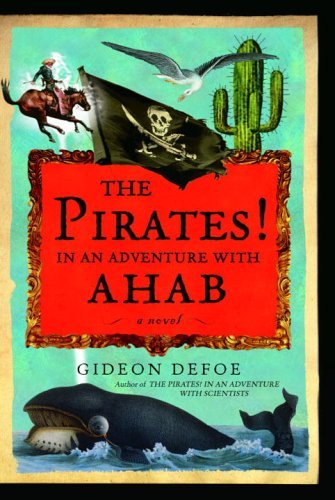
Meanwhile, if you're in the mood for some utterly inconsequential and delightful pirate-based reading, do check out the two "Pirates!" adventures by Gideon Defoe. The one about the whale contains this exchange:


"So, Ahab," said the Pirate Captain, trying to get the conversation going. "Any luck finding that whale?"

Ahab's stony face seemed to set even harder.

"No, Pirate Captain. The beast has continued to evade me these past few days. Just last night I thought I'd finally cornered him, but it turned out to be a big bit of kelp."

"I'm sure it's an easy mistake to make," said the Pirate Captain sympathetically. "It sounds a lot like the time I got into all that confusion with a mermaid."

"A mermaid?" repeated Ahab, actually raising an eyebrow, though the rest of his face remained as impassive as ever.

"Oh yes. I went out with this charming mermaid for...ooh, how long would you say it was, Number Two?"

"About three months, Captain," said the pirate with a scarf, looking a little pained.

"Yes, about three months. It took that long for the lads to convince me that it wasn't really a mermaid at all. It was just a regular fish."

"Surely," said Ahab, "it is an easy enough distinction to make?"

"You would have thought that," agreed the Captain, "but what you have to appreciate is that the top half of that fish was just really very attractive. Normally I prefer the top halves of ladies to have arms and hair and all that, but this girl - or marlin, as I later came to realise - really carried it off. And she was a fantastic kisser."

The Times (of London)

Only just spotted this, from last Saturday's edition of the Times.

Blog of the week, no less!

Thursday, January 19, 2006

National Book Critics Circle finalists

This type of thing doesn't happen very often here at Continuum, so forgive my excitement. But it's *awesome* to have Jonathan Coe's Like a Fiery Elephant as a finalist in the Biography category for these awards. If you haven't read it yet (and, looking at our hardcover sales figures, none of you have) then wait a few more weeks for the paperback: it has one of the best cover designs I've ever seen.

Here's the whole list of finalists. Memoir would seem to be the Group of Death, in footballing terminology. And I'm rooting for Simon Armitage in Poetry: he's a great, great writer.

Fiction
Europe Central by William T. Vollmann
The March by EL Doctorow
Veronica by Mary Gaitskill
Never Let Me Go by Kazuo Ishiguro
Small Island by Andrea Levy

General Nonfiction
Voices From Chernobyl: The Oral History of a Nuclear Disaster by Svetlana Alexievich
The Great War for Civilization: The Conquest of the Middle East by Robert Fisk
Eating Stone: Imagination and the Loss of the Wild by Ellen Meloy
Human Cargo: A Journey Among Refugees by Caroline Moorehead
Night Draws Near: Iraq's People in the Shadow of America's War by Anthony Shadid

Memoir
The Year of Magical Thinking by Joan Didion
Istanbul by Orhan Pamuk
Them by Francine du Plessix Gray
Fat Girl by Judith Moore
Two Lives by Vikram Seth

Biography
Team of Rivals: The Political Genius of Abraham Lincoln by Doris Kearns Goodwin
Mark Twain: A Life by Ron Powers
American Prometheus: The Triumph and Tragedy of J. Robert Oppenheimer by Kai Bird and Martin J. Sherwin
Lee Miller: A Life by Carolyn Burke
Like a Fiery Elephant: The Story of B.S. Johnson by Jonathan Coe

Criticism
Still Looking: Essays on American Art by John Updike
Unnatural Wonders by Arthur C. Danto
Gather at the River: Notes From the Post-Millennial South by Hal Crowther
The Undiscovered Country: Poetry in the Age of Tin by William Logan
What Happened Here: Bush Chronicles by Eliot Weinberger

Poetry
The Incentive of the Maggot by Ron Slate
Crush by Richard Siken
The Shout by Simon Armitage
Bent to Earth by Manuel Blas de Luna
Refusing Heaven by Jack Gilbert

Wednesday, January 18, 2006

Two Reviews by Rev. Keith A. Gordon

Which would you like to read first? There's one of the Springsteen book here, or one of the MC5 book here.

Apologies if yesterday's post caused a few heart tremors. We'll be letting people know via email before announcing anything on here.

Friday, January 13, 2006

The Enthusiast

If you're looking for some new reading material that's smart, heartwarming, funny, inspired, and downright collectible, may I humbly recommend The Enthusiast? The phrase "a British McSweeneys" doesn't do it justice - but if that concept whets or piques any part of your anatomy, you might want to take a look.

Thursday, January 12, 2006

Drastic Plastic Ramones review

A good review in the current issue of Drastic Plastic Press, of Nick Rombes' book about the first Ramones record:

Continuum’s 33 1/3 series analyzes individual canonical rock ‘n’ roll albums. It is to their credit that Ramones/Ramones has made it into their “hall of fame” of sorts. Detroit’s Nicholas Rombes stage dives into the sociocultural climate that gave birth to the Ramones' debut record. This is not a VH1 style tell-all book chronicling the Ramones’ rock ‘n’ roll rollercoaster ride and endless band in-fighting. Rombes’s
concern here are the social factors that allowed for a phenomenon like the Ramones to happen. This is as deep as a discussion of bubble gum pop and punk rock can get,
but don’t let that scare you off, like the album it discusses the book is a short, sweet, and intense ride.

Rombes sees the Ramones eponymous first release as a pivotal album calling it either “the last great modern record or the first great postmodern one.” The Ramones' simultaneous genius and naiveté confound Rombes (as they do anyone who actually pauses to think about the band). Rombes points to a rejection of the mandated “niceness” of the 70s, the suburban teen’s fascination with the city, the development of camp culture, B-movies and comic books and groundbreaking films like Taxi Driver (remember Deniro’s Mohawk?) as contributing to a culture ready to give birth to and accept a band like the Ramones.

Rombes spends many pages mythologizing the rock critics of the time who found a fresh, more self-aware voice in punk rock criticism. Many of these reviewers were in bands themselves and their reviews were as much about their experience as the band’s music. Rombes digs up a 1976 review of the Ramones from Richard Hell. Hell writes that the “music the Ramones create from these feelings [of frustration] is incredibly exciting. It gives you the same sort of feeling you might derive from savagely kicking in your smoothly running TV set and then finding real thousand dollar bills inside.”

Rombes spends some time boiling down theories about what punk is, how it relates to
politics, fascism, and “anarchy;” when punk started, who was the first punk band etc. Many of us have had these often frustrating, circular discussions with friends ad nauseam, but here Rombes does a concise job of laying out a solid thesis (complete with a chart), detailing the various early waves of punk (or new wave, as the terms are proved interchangeable) and approaching these topics in a thoughtful but fun way.

There is a lot going on here for a book that is really supposed to be about the first release from the Ramones. Punk rock and our experience with it is often a very personal and passionate thing for the misfits attracted to it. Some of what Rombes says here I disagree with, but that is part of the fun; this book got me thinking about this culture in ways I never had before.

--Craig Campbell

Teaching Zep

Dr. Josh Gunn, in the Department of Communications at the University of Texas, Austin, is currently teaching a fascinating course on Rhetoric and Religion. And one of the required texts for his lucky students is Erik Davis' book on Zeppelin IV. For those of you who want the full details of the course, here they are:

CMS 367: Rhetoric and Religion
Paranormalism and Theological Form
MWF 11:00-12:00, CMA A3.124
Dr. Josh Gunn
Phone: 471-3933 Office Address: CMA A7.126
Office Hours: M: 10-11; F: 2-3. Email: slewfoot@mail.utexas.edu

Course Texts: Erik Davis, Led Zeppelin IV, Bob Ellis, Lucifer Ascending, Erich Goode,
Paranormal Beliefs: A Sociological Introduction; Whitley Strieber, Communion: A True Story;
Malachi Martin, Hostage to the Devil: The Possession and Exorcism of Five Contemporary
Americas; John Edward, Crossing Over ; AND a reading packet available at the “Serve-UCenter”
at Highland and Stanford (just south of the south gate). If you do not own a bible, a
copy of Revelations titled The Apocalypse would be helpful.

****

Thanks to St. Murse for the tip-off, and to Josh for the syllabus details.

Tuesday, January 10, 2006

John Perry, Freddie Stevenson


Got an email yesterday from John Perry - guitar legend and author of our Hendrix book. He'll be in NYC at the end of this month, playing a show at the Lakeside Lounge, as part of Freddie Stevenson's band.


If you're looking for something new to listen to, take a moment to head over to Mr. Stevenson's website. There are three songs to download on there. Two of them ("Sunday Morning Girl" and "Woe to You My Princess") are sharp little folksongs, and the third ("If You Don't Kiss Me") is a forthcoming single in the UK, and has Radio 2 Playlist stamped all over it - it's bright, breezy, confident pop. Mr. Stevenson's enunciation is something to behold, too: no lyric sheets required here!

Monday, January 09, 2006

Forever Changes

There's an interview on Pitchfork today with Alasdair MacLean of the Clientele. I've only heard snippets of their recent album, but the first two I love to bits. Anyhow, always nice to see a random 33 1/3 series mention in a chat like this - even if it does contain the phrase 'grad student view':

Pitchfork: How long had you been doing the ad copy writing? That's quite different from lyric writing.

Alasdair: For about four years. I used to do books before that. I worked for a book publisher, and actually attempted to turn down Harry Potter. The first Harry Potter title came in, and we had an editorial meeting about it, and I said, "This is just absolute rubbish. There are so many better children's books that aren't being published." And I was overruled. So, they published the book, and all my bridges are burned. I was a bit harsh on it at first. I wanted them to do a biography on Arthur Lee, and everyone said, "Who's Arthur Lee?" So I was never happy in that job.

Pitchfork: Have you read the 33 1/3 Series' book on Forever Changes?

Alasdair: It's pretty interesting actually, but it's kind of a grad student view. They talk about the American tradition of prophecy, and how it leads into Arthur Lee's heroes, and kind of the disjointedness of the music, and they link it together with quotes from Henry Thoreau and Ralph Waldo Emerson and people like that, Walt Whitman. So it's pretty interesting.


You can read the whole interview here. And if you're interested in the book itself, I'm sure that Amazon can help you out.

Saturday, January 07, 2006

Friday, January 06, 2006

Spring Sampler Giveaway!

I'm intrigued as to why it took this guy 13 years to progress from urinating to using a hammer.

Do you want one of our Spring Sampler books? They're blue, and they contain excerpts from the upcoming books about The Stone Roses, There's a Riot Goin' On, Paul's Boutique, Court & Spark, Doolittle, and Daydream Nation. The first ten people to email me (david at continuum-books.com) with their mailing address will get one of these. And the first three people will also receive one of our highly sought-after Bob Dylan Encyclopedia samplers, too.

Thursday, January 05, 2006

Nick Rombes

Nick Rombes, author of the Ramones book in our series, puts together an excellent blog that goes by the name of Digital Poetics. Definitely worth following, if you have even a flicker of interest in film and film theory.

Wednesday, January 04, 2006

John Niven on Beatrice

You can read a short piece here by John Niven about his Big Pink book, on the excellent Beatrice site.

Tuesday, January 03, 2006

Big Pink reviewed in Scotland

A very happy new year to everybody. I'm finally back from my travels, with a charming and quirky wedding venue found and confirmed, just outside of Hay-on-Wye (legendary "Town of Books"), on the Welsh border. Anyhow...

Here's an interesting review of John Niven's book, from the Dec 18th issue of Scotland on Sunday (Scotland's main Sunday newspaper, for those who don't know).

PUBLISHER Continuum has produced a startling series of monographs on some of the greatest rock albums; but in this attempt to get to the heart of Music From Big Pink by The Band, Niven opts for novella rather than any conventional discussion of the work. Wannabe musician and successful drug-dealer Greg meets - or meets people who know - Bob Dylan, Lou Reed, William Burroughs and Ringo Starr, as well as The Band. The writing is punchy, but the frequency of purple passages as he shoots up and gets down to significant songs is wearing. There is a lovely coming of age story here, wrapped around the album in an oddly parasitic manner.

I'm not sure that it's a coming of age story at all - it's never struck me in that way. And is there really too much filth in the book? I must have read it ten times now, and it's never failed to move me.